We begin this week with swirling emotions. We are so thankful for a wonderful RFS last week. It is always good to see our distributed learners on campus. We are thankful for the successful experiment of holding RFS 2 at Mt. Olivet Lutheran Church in Minneapolis and are grateful that all are safe.
We also have heavy hearts as the tensions on our streets continue to mount. We pray for our neighbors who are living in fear and sheltering in place. On this day when we celebrate the life and work of Martin Luther King Jr. we are reminded how much we need his message of non-violent action.
We pray for our city, our nation, and our world. We pray that evil would be exposed, that truth-in-love would be the standard, that justice and shalom would engulf us. May we, as disciples of Jesus, walk in the way of Christ in the midst of it all.
Back to Our Weekly Rhythm
This week marks the beginning of our regular rhythm of communal spiritual practices for the Winter term. Mark your calendars for 11:00am Monday-Thursday each week (not Monday this week for MLK).
Tuesday | Contemplative Practice. Hybrid in Meditation Chapel and on Zoom.
Wednesday | Service of Holy Communion and Chapel Cafe. Hybrid in Chapel and on YouTube.
Pastor Emily Rova-Hegener will lead us this week as she preaches about Jesus’ ministry beginning and how we are called to break bread together. She will continue the communion table with her Brake Bread practice in the Narthex immediately following the service. This practice is designed to gather us in community and remember the work that God has done and is doing in the physical space of the Chapel of the Incarnation. She is doing this practice as a way to help us begin the transition of saying goodbye to this campus and being open to a new thing that God is doing.
Thursday | Lunch Church. Dining Room. In-Person
Join us this week as Suresh Salam, M.A. Student, shares his “Why Jesus?” testimony.
A Reflection on the Good News
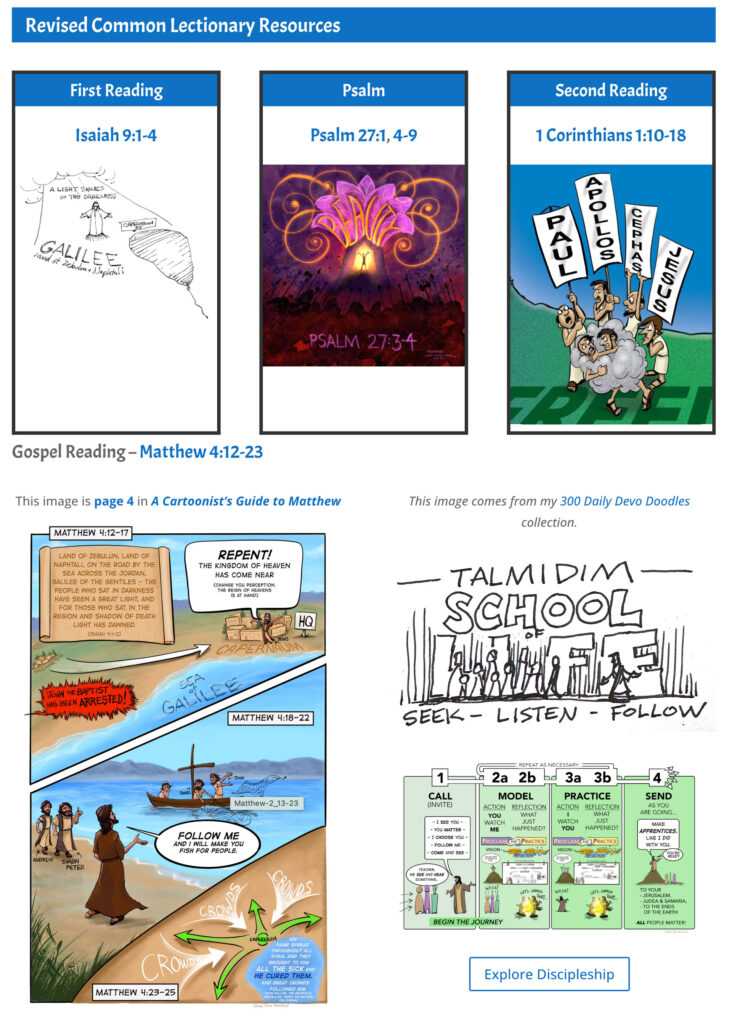
The Revised Common Lectionary readings this week set the stage for Jesus’ ministry as he begins in Galilee. They also fit really well with the state of the world today. Our twin cities and our state have been the focus of attention for the past couple weeks as ICE agents roam our streets. Renee Good was shot and killed, another man was shot. Thousands of people have been dragged from their homes and detained, many of them U.S. Citizens. Protestors are marching in the streets, tear gas and rubber bullets are flying. The Spanish-speaking population and Somali community are sheltering in place, cut off from supplies. Our international students are afraid to leave campus to go to church. The tensions are mounting.
The nation, and the church, is divided over this news and how to interpret it.
The readings remind us that Jesus lived in a similar time and the church has always been embroiled in tension and divided by factions. Isaiah 9 is quoted in the first part of the Gospel reading and reminds us that Jesus began his ministry in Galilee, not in Jerusalem. This was a political statement. The people of Israel had spent centuries living under the occupation of one Empire after another. The Romans ruled the land during Jesus’ life. The puppet Kings of Herod’s dynasty colluded with the Empire and terrorized the Jewish people with exorbitant taxes and unjust governance. Jesus set up his headquarters far from Jerusalem and at the base of the fishing industry in Capernaum.
Jesus came to proclaim a different kind of kingdom. He called fisherman to be his disciples and to reimagine the purpose of their work. He demonstrated to the world that God’s Kingdom was not about dominance and oppression, but about healing and restoration of people who live on the margins. He came to bring the kin-dom—the beloved community—of God for the Shalom of the world.
And it cost him his life.
Psalm 27 reminds us that we are often surrounded by violence, but even in the midst of it we can seek beauty in the house of the LORD. Paul critiques the Corinthians for having petty factions among themselves. He reminds them that the Good News of the cross is foolishness to the systems of the world, but it is the power of salvation for those who follow it.
This week we are reminded that the life of discipleship is an invitation to walk into a world that is fraught with violence and show people a different way. The way of Jesus is the way of healing. It is a way that “shines a great light into the darkness.” We are invited to follow Jesus as he “went throughout Galilee, teaching in their synagogues and proclaiming the kingdom and curing every disease and every sickness among the people (Matthew 4:23).”
Let us be the Good News this week.