Where did you grow up, and what first got you interested in studying theology and ministry?
I come from the Iringa region in the south of Tanzania. I am the third of seven children in my family, with four sisters and three brothers. My journey to Christianity has been shaped by various experiences. I was raised in a Christian household, where my father, who was an evangelist at the time, later became a pastor and is now retired. My parents played a crucial role in my relationship with Jesus. I was baptized as an infant in the Evangelical Lutheran Church in Tanzania in a small town. My parents shaped my upbringing because at home, we had evening devotions every day that included reading and discussing scripture, singing a hymn from our church hymnal, and prayer. My mother was always good at telling me Bible stories whenever she had the chance. I attended Sunday school every week—in the evenings, I would review lessons with my parents. When I learned to read and write, I realized that the stories my mother told were from the Bible, which sparked my interest in reading. Studying theology wasn’t my goal because I planned to become an accountant at the bank. I tried to avoid this calling to be a pastor, but unfortunately, it wasn’t easy.
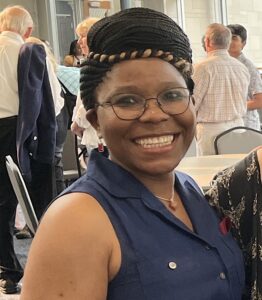
What did you study as an undergraduate, and where did you go?
I earned a bachelor of Theology in 2006 and a master of Mission and Community Development in 2012 at the University of Iringa in Tanzania.
What led you to pursue theological education here at Luther Seminary?
There were many reasons, but to mention a few, I was applying to different institutions around the world. Luther is good at communication, so they responded quickly. Additionally, I was interested in focusing on mission studies and strengthening my leadership because, after more than 15 years of work, I had identified weaknesses in my leaderships that I’m addressing now at Luther Seminary. Also, my church wants a female theologian to teach, so I needed the appropriate qualifications. Luther’s broad access to scholarships was also a major factor.
What degree program are you in at Luther Seminary, and what are you hoping to do with your seminary education?
I am a second-year student pursuing a Master of Theology with a focus on congregational mission and leadership. My main goal is to serve my community and teach the true gospel as they face numerous challenges, such as poverty, corruption, mismanagement, lack of accountability, youth unemployment, climate change, environmental degradation, and the conflict between the prosperity gospel and biblical stewardship. This is important because the church’s unclear teachings weaken the connection between theology and everyday life for the people. My secondary goal for the Th.M. program is as a stepping stone toward pursuing a Ph.D., which my church strongly encourages. Additionally, the program will help me publish on various issues facing African communities.
What has your student experience been like, and what do you do—professionally and otherwise—when you’re not studying?
I am a residential learner. I have learned a lot from meeting people from different backgrounds and observing how Luther has been accomplishing its mission of accepting them with the love of Jesus Christ. I have been visiting local congregations about twice a month for the past year as a preacher, dynamic speaker, and storyteller.
Thinking about your own professional, academic, and personal goals, how would you describe the value of Luther Seminary’s strength as an academic institution?
Luther Seminary is an excellent place to study and prepare future leaders. Professors and staff are approachable and listen to their students; they are here to help you emotionally, spiritually, and intellectually to earn your degree.
What’s your hidden talent?
Empathy, encouraging others, and intercessory prayer. I am also a traditional dancer.