Where did you grow up and what drew you to a career in higher education?
I was born and raised in Windhoek, Namibia, and spent much of my early childhood with my grandparents in a rural village called Ombombo, where daily life was shaped by shared responsibility, interdependence, and care for land and livestock. As a child, I helped tend goats and cattle and learned early lessons about stewardship, community, and belonging. When I reached school age, I returned to Windhoek and grew up in Katutura, a predominantly Black township created by the apartheid regime following the forced removal of Black residents from their original community. Living in Katutura meant navigating the realities of racial segregation, limited resources, and systemic injustice, while also experiencing the strength, creativity, and resilience of community life.
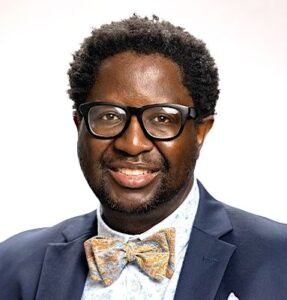
For high school, I attended a Lutheran school that served as an alternative to apartheid education and was deeply connected to the Lutheran Church in the Republic of Namibia. The school emphasized critical thinking, moral responsibility, and education as a means of liberation and service. It was there that my love for learning and teaching was nurtured and where I began to understand education as both a personal gift and a communal responsibility. I started my career as a middle school teacher in Namibia, and in that role, I witnessed firsthand how access to quality education could change life trajectories—not only for individual learners but for families and entire communities. That experience led me into higher education, where I have sought to prepare educators and leaders who are caring, adaptive, reflective, and deeply engaged with the contexts they serve. I remain passionate about the ways higher education, when used intentionally, can transform lives and communities for generations.
How long have you lived in Minnesota and where else have you lived and worked during your career?
I have lived in and out of Minnesota since 1993, when I first came to the United States from Namibia to pursue my undergraduate education at Concordia College in Moorhead. Over the years, Minnesota has become my home away from Namibia, and I have come to love its vibrant communities, beautiful lakes, and the rhythm of its seasons. Even after all these years, I still find myself complaining about the cold when March rolls around, but it is part of what makes the state so special—the dramatic seasonal changes, the beauty of snow-covered landscapes, and the warmth of the community that emerges in every season. Throughout my career, I have lived and worked in several states, including Georgia, Montana, and Wisconsin, while maintaining strong professional and personal ties to Minnesota. My work has spanned diverse institutional contexts from community colleges to comprehensive universities.
Tell us about your interest in serving at Luther Seminary as our Dean of Students.
I have spent my entire professional career in higher education, and Minnesota has long been home to my personal and professional support networks. Friends and colleagues often encouraged me to return permanently, as I found myself coming back regularly for conferences, professional gatherings, and visits and always feeling grounded and renewed while here. When my two-year contract in Wisconsin concluded, I began a broad job search and, with the help of colleagues, found my way to Luther Seminary. That call led to a conversation about serving as Interim Dean of Students and Vice President of Inclusion and Belonging. While I was exploring several possibilities, I was especially drawn to faith-based institutions in the Twin Cities and to communities committed to serving diverse learners. My interest in Luther Seminary felt deeply vocational. The work resonated with me, bringing together my passion for learner development, inclusion, and belonging with theological education and leadership development. I am grateful for the opportunity to serve in this role and to walk alongside learners as they prepare for lives of faith, leadership, and service.
What’s the most important thing you want learners to know about the Student Affairs team?
I want learners to know that the Student Affairs team is deeply committed to your success and well-being—academically, personally, spiritually, and professionally, and that you are not alone in your theological education journey, whether you are a residential student or a distributed learner. We are here to accompany you—to listen, advocate, and support you as whole people. We’re here to help create an inclusive environment where every learner feels seen, valued, and able to thrive. Our work is grounded in care, connection, and partnership, and we believe learner success is strongest when people know they do not have to navigate their education on their own. Wherever you are and whatever season you are in, the Student Affairs team is committed to meeting you where you are and walking alongside you with consistency, compassion, and integrity.
Is there anything else you want to share with the community during this crucial time in the seminary’s and the church’s life?
As a devoted Lutheran who is new to the seminary community, I come to this moment with both humility and hope. Already clear to me is the deep commitment this community holds to preparing leaders for service in a changing church and world. As the seminary looks toward the future, it feels especially important to remain grounded in our mission of offering contextual, lived educational experiences that equip leaders to serve across cultures and communities, even as new questions and possibilities emerge. While the future at times feels uncertain, our hope is rooted in God’s faithfulness and the enduring work of the church. In seasons of transition, we must stay connected to one one another, especially as many of us live and learn at a distance. Community does not diminish during change—rather, community deepens. Through prayer, learning, service, reflection, and mutual care, we continue to be formed together for lives of faithful leadership and service, sustained by hope and connection even across distance.